If you are deciding between a brand-new home and an older property in Pinecrest, you are not just choosing finishes or floor plans. You are choosing between two very different paths in a village where lot size, mature trees, and redevelopment potential can matter just as much as the house itself. This guide will help you compare new construction and resale homes in Pinecrest so you can make a smarter move with more confidence. Let’s dive in.
Why this choice matters in Pinecrest
Pinecrest is not a place with endless open land or large waves of new housing. The village is about eight square miles, is largely low density, and is considered virtually built out under local planning documents. That means many buyers are comparing a limited number of luxury new builds against a much broader mix of existing homes on large, established lots.
This local setup changes the usual new-versus-resale conversation. In Pinecrest, your decision often comes down to how much you value turnkey living, mature landscaping, redevelopment options, and the realities of local permitting and tree protection.
Pinecrest market snapshot
Recent market data shows Pinecrest in the low-to-mid multi-million-dollar range. Redfin reported a median sale price of $2.17 million in March 2026, with a median 101 days on market. Zillow also placed typical home value around $2.17 million, while Realtor.com described Pinecrest as a buyer’s market, with homes selling at about 95% of asking price.
That matters if you are weighing both options. In a market that gives buyers more room to compare, you may have time to look closely at condition, lot quality, and future costs instead of rushing into a decision.
What new construction looks like in Pinecrest
New construction in Pinecrest is limited and mostly sits at the luxury end of the market. Redfin showed 13 new-construction homes for sale, with a median listing price of $3.9 million. Zillow examples ranged from about $4.995 million to $16.99 million.
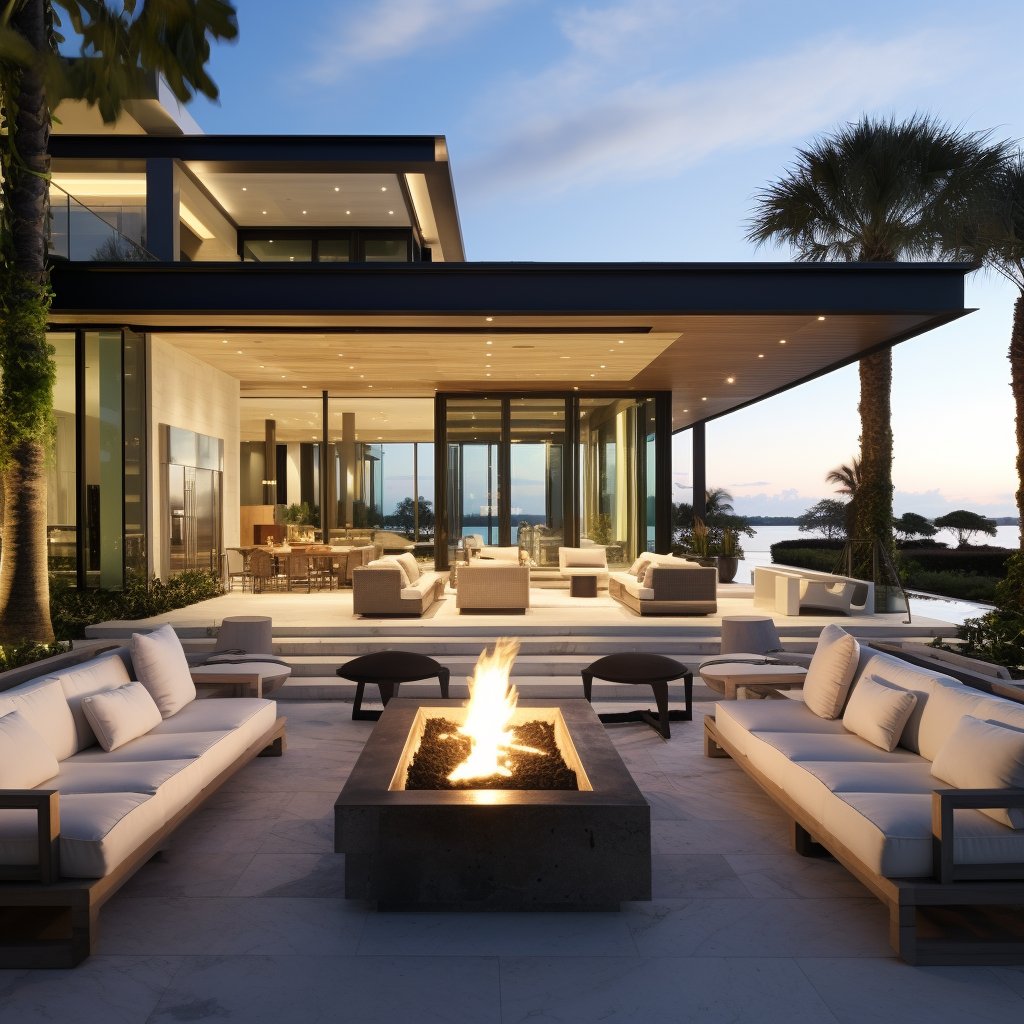
These homes tend to lean into contemporary custom-estate design. Current listings highlight features like expansive glass, open layouts, custom kitchens, home automation, resort-style pools, and indoor-outdoor entertaining spaces. One recent example in North Pinecrest was under construction on 0.88 acres with completion projected for fall 2026.
Pros of buying new construction
A new home can be appealing if you want a move-in-ready property with modern design and fewer immediate repair concerns. In Pinecrest, many new homes are built around today’s buyer preferences, including open living areas, larger kitchen footprints, and strong indoor-outdoor flow.
New construction also starts from the current code baseline. The Florida Building Code, 8th Edition (2023), became effective on December 31, 2023, and new residential construction must meet current thermal efficiency standards tied to the Florida Building Code-Energy Conservation. In practical terms, that can support lower lifetime utility costs compared with some older homes.
Trade-offs of buying new construction
The biggest downside is usually price. In Pinecrest, new construction tends to sit well above the village’s broader market median, so buyers often pay a premium for new finishes, code-current systems, and custom design.
Timing can also be a challenge. Pinecrest requires separate permit applications for grading, demolition, mechanical, electrical, plumbing, and general building work. Projects that involve demolition, new construction, or changes to dimensions or appearance may also need design review, and revisions can extend the timeline.
There is also the site-planning factor. Pinecrest places a strong priority on canopy preservation, and tree removal permits are required for non-exempt trees. If a property has significant mature landscaping, that can shape what gets built, where it gets built, and how long approvals take.
What resale homes offer in Pinecrest
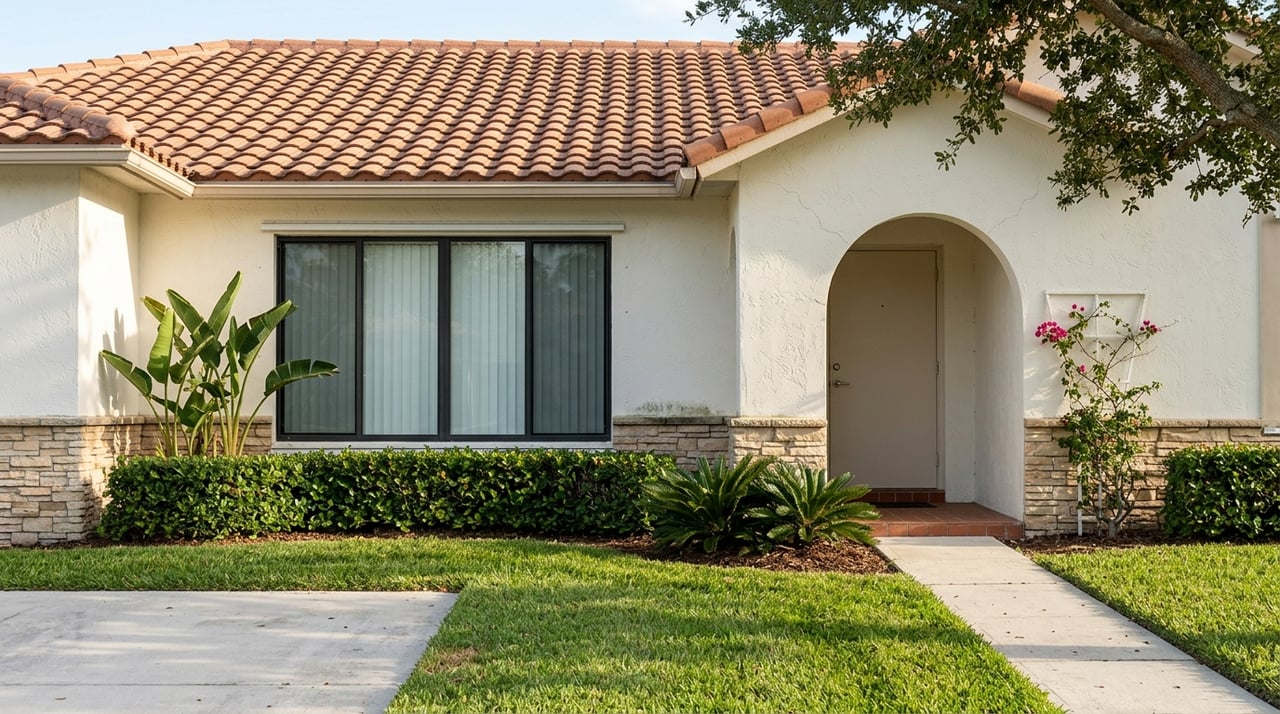
Resale homes remain the classic Pinecrest option. The village’s history notes that many homes were built in the 1950s and 1960s as ranch-style houses on acre lots, and that legacy still shapes the housing stock today.
For many buyers, resale homes offer something hard to replicate. You often get established streets, mature landscaping, and a stronger sense of continuity from one property to the next. Realtor.com’s Pinecrest guidance also notes that existing homes generally provide quicker move-in compared with new construction.
Pros of buying a resale home
A resale home may give you better access to Pinecrest’s traditional setting. Large lots, mature trees, and older ranch-style layouts can create a different living experience than a newly built contemporary estate.
You may also have more flexibility in how you approach the property over time. Some buyers want a home they can update gradually. Others see value in buying for the lot first, then renovating, expanding, or rebuilding later if local rules and site conditions allow.
Price positioning can be another advantage. Because Pinecrest’s new-construction inventory is concentrated at the top end, resale homes may open the door to the village at a lower price point than a newly built estate, even if updates are needed.
Trade-offs of buying a resale home
An older home can come with more questions up front. Condition, age of systems, prior renovations, and overall maintenance history all matter more when you are buying a property that has changed hands or been modified over time.
If you plan to renovate or tear down, Pinecrest’s local rules still play a major role. Projects that change a home’s dimensions or appearance may require design review, and buyers may also need to navigate variances for setbacks or floor area, along with the same layered permit process used for new construction.
Tree impacts can be a major issue here too. Tree removal approval is tightly regulated, so a lot that looks full of possibility at first glance may have meaningful limits once preservation rules are factored in.
Key Pinecrest factors to compare
In Pinecrest, the house is only part of the decision. Whether you buy new or resale, a few local details can shape value, cost, and long-term plans.
Lot size and buildability
Because Pinecrest is largely built out and strongly defined by low-density zoning patterns, lot value is a major part of the equation. A larger lot may support future flexibility, but you still need to understand setbacks, design review triggers, and how the site can actually be used.
Tree canopy and preservation
Pinecrest treats canopy preservation as an ongoing priority. The village’s planning framework directs redevelopment to preserve open space, landscaping, native vegetation, and tree canopy. That means existing trees can affect additions, rebuilds, and even the placement of outdoor features.
Sewer or septic status
This is one of the most important Pinecrest-specific due diligence points. Local planning documents note that many single-family subdivisions were historically approved for septic tanks where sewer is unavailable. Before you buy, confirm whether the property is on sewer or septic and whether any future connection requirements could apply.
Flood zone and insurance review
Pinecrest promotes floodplain management and participates in the National Flood Insurance Program. For buyers, that means flood zone review and insurance pricing should be part of the decision early, whether you are considering a resale home or new construction.
Permit history
Permit records can tell you a lot about a home. If you are looking at an existing property, check for past work, open issues, or expired permits. If you are buying new construction or planning future improvements, understand how permit timing, revisions, and inspection gaps can affect your schedule.
Which option fits your goals?
There is no one-size-fits-all answer in Pinecrest. The better choice depends on how you want to live now and what flexibility you want later.
New construction may fit best if you want:
- A turnkey home with contemporary design
- Code-current systems and energy-efficiency standards
- Fewer immediate maintenance projects
- A luxury price point and patience for build or completion timing
Resale may fit best if you want:
- An established setting with mature trees and landscaping
- More traditional Pinecrest housing stock and lot character
- Faster move-in potential
- The option to renovate, expand, or reassess redevelopment later
A simple Pinecrest decision checklist
Before you choose between a new construction home and a resale property, compare these items side by side:
- Purchase price versus total expected cost
- Lot size and practical buildability
- Flood zone and current insurance quotes
- Sewer versus septic status
- Permit history, including any expired permits
- Tree impacts and preservation limits
- Timeline for move-in or future work
When buyers slow down and review these points carefully, the right choice usually becomes much clearer.
In Pinecrest, the smartest purchase is not always the newest home or the prettiest kitchen. It is the property that matches your budget, timeline, and long-term plans while fitting the village’s unique rules around land, trees, and redevelopment. If you want help comparing homes, lots, and next-step potential in Pinecrest, connect with Adrian Gonzalez for local, hands-on guidance.
FAQs
Is new construction common in Pinecrest?
- No. New-construction inventory in Pinecrest is limited and concentrated at the luxury end of the market.
Are resale homes in Pinecrest usually older?
- Many are. Pinecrest’s housing history includes a large number of 1950s and 1960s ranch-style homes on large lots.
Is new construction in Pinecrest more expensive than resale?
- Often yes. Recent data showed Pinecrest new-construction listings around a $3.9 million median listing price, above the broader market median sale price of $2.17 million.
What should Pinecrest buyers check before buying a resale home?
- Review lot size, permit history, tree impacts, flood zone, insurance costs, and whether the property uses sewer or septic.
Can tree rules affect a Pinecrest home purchase?
- Yes. Pinecrest requires permits for removal of non-exempt trees, and canopy preservation can affect site planning, renovation scope, and redevelopment potential.
Do Pinecrest renovations require permits and design review?
- They can. Projects involving demolition, new construction, or changes to dimensions or appearance may require design review and multiple permit applications.