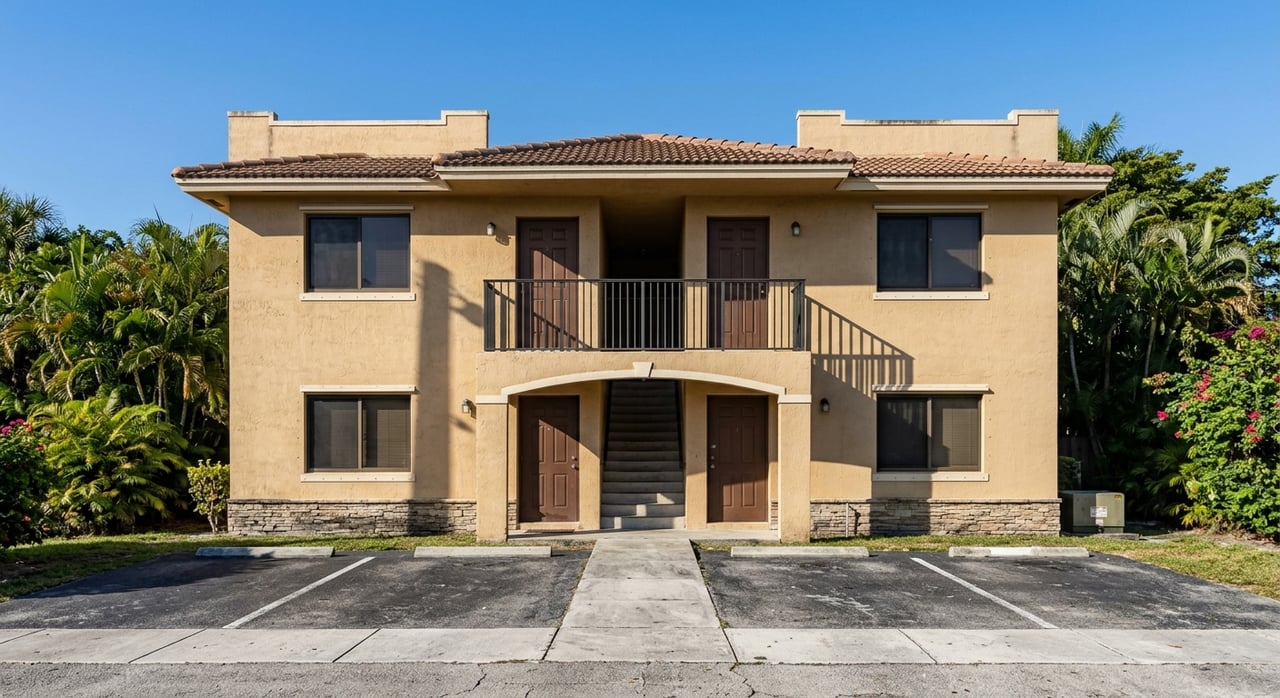
Are you thinking about buying a duplex, triplex, or fourplex in Kendall? If so, you are looking at a part of Miami-Dade that offers something many investors want: a real renter base in a market that still feels more suburban than apartment-saturated. If you want to understand where the opportunity is, what numbers matter, and how to approach deals carefully, this guide will help you focus on what makes Kendall unique. Let’s dive in.
Why Kendall Stands Out
Kendall is not a dense urban apartment core, and that matters when you are investing in small multi-family property. According to Census QuickFacts, Kendall had 80,241 residents in the 2020 Census, with a 62.2% owner-occupied housing rate. That owner-heavy profile gives the area a more suburban character than many other parts of Miami-Dade.
At the same time, the renter base is still meaningful. The University of Florida ACS profile shows 11,471 renter-occupied units in Kendall, along with 14,102 multifamily units out of 31,923 total housing units. In other words, Kendall supports rental demand, but it does not behave like a market built around large apartment towers.
That balance can appeal to investors who want steady rental demand without relying on the same conditions driving the urban core. For many buyers, Kendall offers a more practical lane for small multi-family investing.
What Small Multi-Family Means
In public housing data, small multi-family usually shows up in the categories for properties with 2 units and 3 or 4 units. That makes this discussion most relevant if you are considering a duplex, triplex, or fourplex. These are often the property types that fit local investors looking for manageable scale and flexible rental income.
Kendall has a meaningful multifamily footprint, but it is still more single-family-heavy than Miami-Dade overall. The ACS profile shows that about 55.5% of Kendall housing units are single-family, while about 44.2% are multifamily. That mix supports rental ownership, but it also means your deal selection matters more than in a denser apartment market.
In a market like this, location, condition, layout, and tenant appeal can have a big effect on performance. You are not just buying units. You are buying a small business inside a neighborhood-driven market.
Kendall Rental Demand Looks Durable
One of the clearest signs of demand is the gap between the cost to rent and the cost to own. Census QuickFacts reports a median gross rent of $1,905 in Kendall, while median selected monthly owner costs with a mortgage are $2,620. That is a difference of $715 per month.
That spread helps explain why renting remains durable even in an ownership-oriented area. Some households may prefer to rent for flexibility, while others may find renting more manageable than ownership costs at current price levels. For investors, that creates a helpful base for long-term rental demand.
Income also supports this picture. Kendall’s median household income is $87,325, and the Census data suggests median gross rent is roughly 26% of median household income on a rough basis. That does not mean every renter has the same budget, but it does show that rents are supported by a substantial local economic base.
Rent Data Needs Context
When you analyze potential income, it is important to compare rent data the right way. Census gross rent reflects all occupied rentals, including older leases that may be below current market asking levels. Active listing rents are often higher because they capture what landlords are asking right now.
Zumper’s Kendall rent research, updated May 10, 2026, shows a median rent of $3,000 across all property types and bedroom counts. It also reports average apartment rent at $2,396, average condo rent at $2,150, average house rent at $3,175, and average rent for a 2-bedroom at $2,400.
That does not mean every small multi-family unit in Kendall will achieve those numbers. It does mean there may be a meaningful gap between legacy rents and current asking rents, especially in older properties that have not been updated or remarketed recently.
A Value-Add Strategy May Fit Best
For many investors, the most practical play in Kendall is not speculative expansion. It is buying older small multi-family property and improving rentability through light to moderate renovation. The spread between older in-place rents and current market asks supports that idea.
If a property has dated interiors, weak presentation, or inconsistent tenant communication, there may be room to improve performance without changing the basic structure. Simple upgrades, cleaner turnover processes, and stronger leasing presentation can matter in this segment.
That approach also fits the broader market tone. Kendall appears better suited to disciplined value-add investing than aggressive assumptions about fast rent spikes or immediate repositioning wins.
Underwrite Conservatively
The Miami rental market still looks firm, but it is not a market where you should assume perfect occupancy or sharp rent jumps. GREA’s Summer 2025 Miami report showed average rent of $2,448, average occupancy of 93%, and 2% year-over-year rent growth for the metro. MIAMI Realtors reported multifamily vacancy at 5.8% in January 2025 after peaking at 6.2% in August 2024.
The takeaway is simple: demand is healthy, but ordinary vacancy, lease-up time, and concessions still need to be part of your numbers. If you are buying a duplex, triplex, or fourplex, your underwriting should leave room for turnover and routine operating friction.
A conservative approach can protect you from overpaying based on best-case rent assumptions. It can also help you spot the deals that still work even if the lease-up takes longer than expected.
Supply Matters, But Kendall Differs
Miami-Dade is absorbing a lot of new multifamily supply. MIAMI Realtors reported 23,340 units under construction in the Miami market area in August 2025, equal to 18% of existing inventory. That kind of pipeline can pressure rents and concessions in some areas.
Kendall’s local pipeline, however, is much smaller. GREA’s Kendall submarket table showed only 226 units under construction and 837 units delivering in 2025. That is still meaningful, but it is far different from what you see in the most heavily built urban-core corridors.
For a small investor, this matters because submarket conditions can vary a lot inside the same metro. Kendall may benefit from participating in Miami’s broad demand base without facing the same level of new supply competition as downtown-focused areas.
Operations Can Create an Edge
In Kendall, operations are not a side issue. They can be part of your investment advantage. Census QuickFacts reports that 67.6% of residents age 5 and older speak a language other than English at home, and 42.8% of residents are foreign-born.
That makes clear communication especially important. Bilingual leasing materials, straightforward move-in instructions, and responsive maintenance communication can improve the resident experience and support retention. In a small multi-family property, even small gains in retention can make a real difference to your annual numbers.
This is one reason neighborhood knowledge matters. A local, hands-on approach can help you market units more effectively and operate the property in a way that fits the community you are serving.
What to Look for in a Deal
If you are screening small multi-family opportunities in Kendall, focus on the basics that affect performance most:
- Older properties with room for light to moderate improvement
- Unit layouts that match common renter demand, especially practical 2-bedroom formats
- In-place rents that appear below current asking levels for comparable product
- Locations with stable rental appeal inside Kendall’s broader suburban setting
- Properties where better marketing, leasing, or communication could improve results
You should also pay attention to turnover patterns. The ACS profile shows a more recent median move-in year for renter-occupied units, 2015, than for owner-occupied units, 2005. That is a reminder that rental housing often moves on a different cycle, and your plan should account for renewals, re-leasing, and unit-ready timing.
Why Local Sourcing Helps
Kendall is still attracting investor attention. GREA noted that suburban markets like Kendall have seen larger transactions this year involving upper-tier assets. That signals continued buyer interest beyond Miami’s most supply-heavy urban corridors.
For a small or mid-size investor, broad sourcing matters. Public listings can produce opportunities, but local MLS access and off-market channels may uncover deals that fit your criteria better. In a market where value often comes from buying the right older asset at the right basis, deal flow can be just as important as property management plans.
That is where a boutique, locally focused brokerage can add value. If you want hands-on guidance, bilingual communication, and help sourcing both listed and off-market investment opportunities, working with a broker who knows Kendall’s small multi-family landscape can save time and sharpen your decision-making.
Final Thoughts on Kendall Investing
Kendall is best viewed as a suburban, owner-leaning Miami-Dade market with enough renter depth to support small multi-family investing. It is not an apartment-heavy environment, and that is part of the appeal for many investors. You get renter demand, a smaller local construction pipeline than the urban core, and real value-add potential in older properties.
The best opportunities are likely to go to buyers who stay disciplined. If you underwrite conservatively, focus on rentability, and source deals broadly, Kendall can offer a practical path into duplex, triplex, and fourplex investing.
If you are exploring a small multi-family purchase in Kendall and want local guidance on pricing, sourcing, or off-market opportunities, connect with Adrian Gonzalez. You will get owner-led support, bilingual service, and a hands-on approach built for Miami-Dade investors.
FAQs
What types of small multi-family properties are most common for Kendall investors?
- In this context, small multi-family usually refers to duplexes, triplexes, and fourplexes, which align with the census categories for 2-unit and 3-or-4-unit properties.
Is Kendall a strong rental market for small multi-family investing?
- Kendall has a meaningful renter base, 11,471 renter-occupied units, and a cost gap between median rent and median monthly ownership costs that helps support durable rental demand.
How should you estimate rent for a Kendall duplex or fourplex?
- You should compare in-place rents with current asking rents carefully, because Census gross rent reflects occupied units while active listing data like Zumper captures current market asks.
Why is conservative underwriting important for Kendall investment property?
- Miami’s rental market is healthy but not overheated, with reported multifamily vacancy near 5.8% in early 2025, so you should budget for normal vacancy, lease-up time, and possible concessions.
Does new construction affect small multi-family investing in Kendall?
- Yes, but Kendall’s local pipeline appears much smaller than the broader Miami market, which may help the submarket hold occupancy better than more heavily built urban-core areas.
What operational strategies can help a Kendall landlord compete?
- Clear communication, bilingual leasing support, responsive maintenance, and strong tenant retention practices can be real advantages in Kendall’s multilingual market.